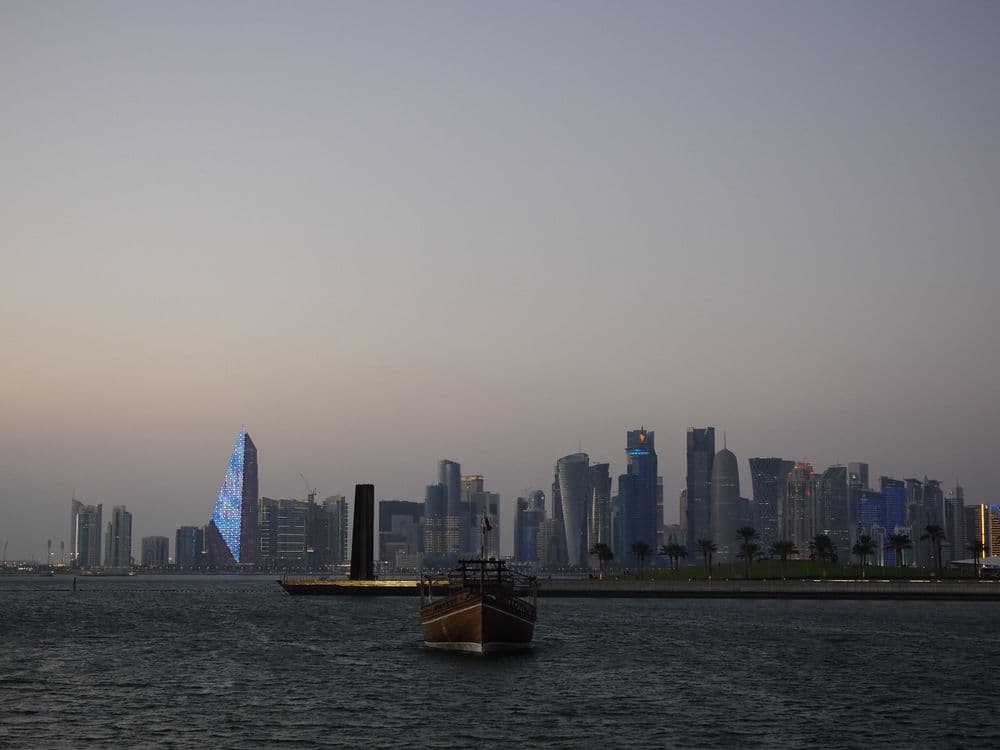
The Middle East lost one of its most transformative leaders on 12 July 2026, when Father Emir H.H. Sheikh Hamad bin Khalifa Al Thani passed away at the age of 74. His death marks the end of an era in which a small, gas-rich Gulf state was reshaped into a global player of immense economic, political and cultural significance. Sheikh Hamad is widely regarded as the architect of modern Qatar, a man whose vision and determination lifted the nation from relative obscurity to a position where it commands respect and attention in the halls of power around the world.
From 1995, Sheikh Hamad pursued ambitious reform, building a diversified economy beyond oil. Qatar's GDP grew more than 24-fold, driven by the North Field, the world's third-largest gas reserve. Under his leadership, Qatar became the largest LNG exporter, with capacity reaching 77 million tonnes per annum, funding massive infrastructure and transforming Doha into a modern city. As a mediator, he facilitated peace in Darfur, Lebanon and between Hamas and Fatah, and opened a Taliban office for US negotiations, supporting the Arab Spring.
The launch of Al Jazeera
Yet his most enduring legacy was the launch of Al Jazeera in 1996, which revolutionised Arab media by offering independent journalism, challenging censorship, and broadcasting live Arab summits, shaping global discourse and cementing Qatar's influence. The decision to establish a news channel with an independent editorial policy was unprecedented in the Arab world. Until then, the region's media landscape was dominated by state-controlled channels that functioned as mouthpieces of autocratic governments, offering propaganda rather than journalism. Sheikh Hamad's vision was to break this pattern and to give a voice to the voiceless.
The launch of Al Jazeera was timely and strategic. In the early 1990s, BBC Arabic had been operating but was shut down unexpectedly, leaving a significant number of Arab journalists unemployed and without work. Sheikh Hamad seized this opportunity, inviting these journalists to join his new channel and providing them with employment and a platform for their professional skills. Al Jazeera became a haven for talent that had been excluded from state-controlled media, and its diversity and experience translated into high-quality reporting.
Al Jazeera's coverage of major global events, including the wars in Iraq and Afghanistan, drew both admiration and hostility. Its reporting was often seen as critical of Western policies, leading to concerns and fury among Western governments. Despite these pressures, Al Jazeera remained a trailblazer. It became the first channel to broadcast Arab summits live, allowing millions of viewers across the region to witness the tone and temper of leaders debating behind closed doors. In 2005, Al Jazeera was voted the fifth most influential brand in the world by Brandchannel.com.
Commitment to editorial independence
Sheikh Hamad's magnanimity was evident in his refusal to interfere with the channel's editorial policy, even when its coverage strained or damaged Qatar's diplomatic relations with other countries. Several nations, including Saudi Arabia, Bahrain, the United Arab Emirates and Egypt, broke or suspended diplomatic ties with Qatar at different times, partly due to Al Jazeera's reporting.
The 2017 diplomatic crisis, when Saudi Arabia, Bahrain, the UAE and Egypt announced a boycott of Qatar, tested this commitment to independent journalism. The closure of Al Jazeera was one of the primary demands in the 13-point list put forward by these countries, yet Doha refused to surrender the channel. This decision underscored Sheikh Hamad's — and later his son and the current Emir H.H. Sheikh Tamim Bin Hamad Al Thani's — belief that a free and independent media was essential to Qatar's identity and credibility as a regional actor.
Sheikh Hamad's vision for independent journalism also extended beyond the Arab world. He offered to set up a channel in Sarajevo, Bosnia and Herzegovina, known as Al Jazeera Balkans. The Balkans region, following the disintegration of Yugoslavia, had a complex demographic structure. Al Jazeera Balkans emerged as the only channel in the region with international standards and professional journalism, setting a benchmark for media quality and influencing the development of other international channels broadcasting in the local language.
A lasting legacy
The legacy of Sheikh Hamad bin Khalifa Al Thani is one of transformation, courage and innovation. He took a small Gulf state and turned it into a global player, leveraging its natural resources to build a modern economy, a vibrant cultural scene and a sophisticated diplomatic network. His establishment of Al Jazeera fundamentally changed the media landscape of the Arab world, challenging censorship and empowering citizens with access to independent information.
As the world reflects on his life and achievements, Sheikh Hamad is remembered not only as the man who modernised Qatar, but also as the leader who dared to imagine a different future for the Arab world and beyond. His commitment to independent journalism, education, culture and regional mediation stands as a lasting inspiration for leaders and citizens alike.