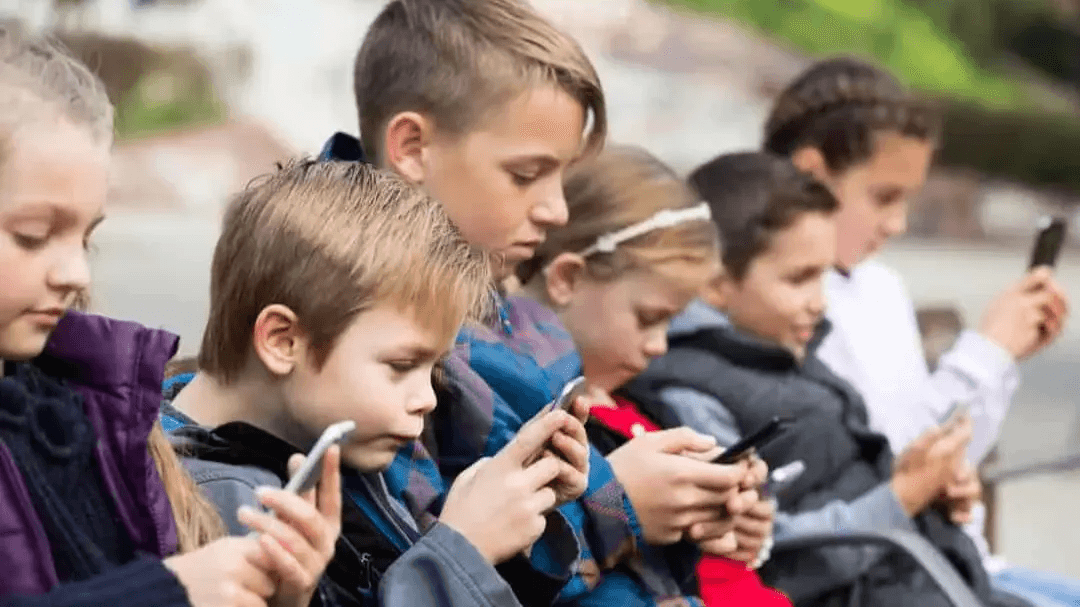
Australia has once again placed itself at the forefront of global efforts to protect children online. In a move that reinforces its world-first social media age restrictions, the Albanese Government has proposed doubling the maximum fines for technology companies that fail to prevent children under 16 from accessing social media platforms or refuse to provide evidence that they are complying with the law. The maximum penalty would rise from A$49.5 million to A$99 million, while companies that fail to hand over documents requested by the eSafety Commissioner could face additional penalties.
Prime Minister Anthony Albanese has made no secret of the Government's frustration with the major technology companies. "There are still too many children on social media and the tech companies are not doing enough," he said, making it clear that voluntary compliance is no longer sufficient.
A polarised debate
The debate surrounding Australia's social media age ban has become increasingly polarised. Supporters argue that governments have a responsibility to protect children from the well-documented harms associated with excessive social media use, including cyberbullying, anxiety, depression, body image issues, exposure to harmful content, sleep disruption and online exploitation. They believe responsibility should lie primarily with the platforms rather than parents or children, particularly when those platforms are deliberately engineered to maximise user engagement through sophisticated algorithms.
Opponents, however, argue that the legislation is difficult to enforce and that determined teenagers continue to find ways around it. Recent research conducted by the University of Newcastle suggests that more than 80 per cent of Australian children under the age of sixteen continue to access social media despite the restrictions. Around 15 to 19 per cent admitted creating fake accounts by entering false dates of birth, while approximately 3 per cent used Virtual Private Networks to bypass geographical restrictions.
Why the critics are wrong
Critics point to these figures as evidence that the legislation has failed. I see them differently.
Even if Australia's legislation prevents only a fraction of children from entering this digital environment too early, thousands of families may benefit. No public policy achieves absolute compliance. Speed limits do not eliminate speeding. Tax laws do not prevent every instance of tax evasion. Laws against drink driving have not eradicated impaired drivers. Yet society continues to enforce these laws because they reduce harm. The same principle should apply to children's online safety.
There is another compelling reason why the Government is right to hold technology companies accountable. The world's largest social media platforms have invested billions of dollars developing artificial intelligence capable of predicting user behaviour with astonishing accuracy. Their algorithms know what users like, what keeps them engaged, which advertisements they are most likely to click and even what content is most likely to extend viewing time by a few extra seconds.
Against that backdrop, it is difficult to accept the argument that they somehow lack the technical capability to identify underage users or build more robust age-verification systems. If they can accurately target advertising, detect fraudulent activity, identify copyrighted material and recommend content based on complex behavioural analysis, they can certainly invest in technologies capable of significantly reducing access by children who fall below the legal age threshold. Australia's decision to increase penalties to A$99 million sends a clear message that child safety should take precedence over profit.
A global movement
Although Australia is leading the way, it is no longer acting alone. The United Kingdom is actively considering similar restrictions, with Prime Minister Sir Keir Starmer making it clear that protecting children online is becoming a national priority. India is also moving steadily towards stronger regulation of children's online activities. Given that India has one of the world's youngest populations, with more than 350 million children under the age of fifteen, any significant reforms introduced there could have an enormous influence on global technology regulation. Other countries, including France, Denmark, Greece and Poland, are also exploring tighter controls on children's access to social media.
Australia's social media age restrictions may not be perfect, but perfection has never been the benchmark for good public policy.